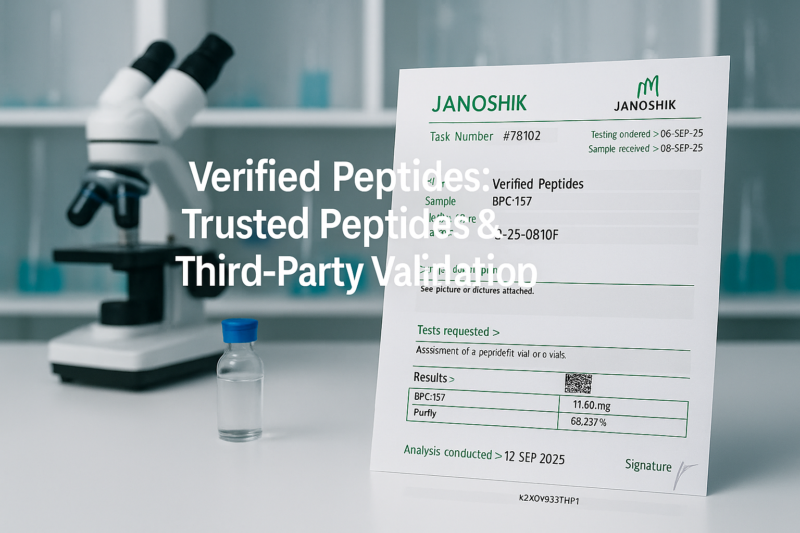
Bpc-157 Peptide Therapy Regenerative Medication Dr Henry Sobo, Md Unlike general supplements or standard problem pharmaceuticals, peptides often tend to behave more like precisely targeted messengers, imitating all-natural hormonal agents or enzymes in the body. Finally, the present research is the first methodical record examining the pharmacokinetics, tissue circulation, metabolic process, and discharging of BPC157. Several methodological validations were not included as a result of the restricted room of the write-up.
Does BPC-157 aid joint inflammation pain?
A peer-reviewed write-up (Lee et al., Alternate Treatments in Wellness & & Medication, ~ 2021) defines: 12 clients with persistent knee discomfort. Treated with intra-articular BPC-157, frequently integrated with TB-500. 7 of 12 reported signs and symptom renovation lasting a number of months.
That Should Take Into Consideration Bpc-157?
Peptide treatment has become significantly preferred amongst people seeking assistance with recovery, swelling, efficiency, healthy aging, and whole-body wellness. Two of one of the most talked-about peptides in this space are BPC-157 and TB-500. In our workplace, our team believe that these therapies represent the future of medication, because they work with your body's all-natural procedures as opposed to versus them. It should be remembered that there are apparent distinctions between the physiologies of rats and people. Therefore, a still completely unidentified device of action, efficacy, and safety and security account can not be ignored. Unlike many various other drugs, BPC 157 has a preferable safety and security account, since just a couple of side effects have actually been reported following its management. Nevertheless, this substance was momentarily outlawed by the Globe Anti-Doping Firm (WADA) in 2022 (it is not currently provided as prohibited by the WADA).
Extra research study has actually shown the effectiveness of BPC-157 in shielding against and healing stomach ulcers in animal designs, highlighting its prospective healing applications in food poisonings.
Ask for assistance on arising biologic therapies are coming to be increasingly typical in sports medication method, particularly as rate of interest in performance optimization expands beyond elite professional athletes.
A research released in the Journal of Cellular Physiology located that BPC-157 sped up the healing of muscular tissue injuries in rats by advertising the formation of new blood vessels and minimizing inflammation.
In this evaluation, we sum up details on the biological tasks of BPC 157, with certain reference to its device of action and possible poisoning.
Not Every Rotator Cuff Tear Demands Surgical Treatment: Exactly How To Recognize Your Tear And Your Therapy Options
The mean outright bioavailability of BPC157 complying with IM shot was about 14%-- 19% in rats and 45%-- 51% in beagle pet dogs. Making use of [3H] -identified BPC157 and radioactivity exam, we verified that the primary purgative paths of BPC157 entailed pee and bile. [3H] BPC157 was quickly metabolized into a range of little peptide pieces in vivo, therefore creating single amino acids that went into regular amino acid metabolism and excretion pathways. In conclusion, this study supplies the initial evaluation of the pharmacokinetics of BPC157, which will be helpful for its translation in the center. BPC 157 is an improved, synthetic peptide motivated by a naturally happening body security substance found in the stomach lining. Acknowledged scientifically as steady gastric pentadecapeptide BPC 157, this specialized amino acid series has acquired significant interest in regenerative and sports medication for its prospective role in soft-tissue repair service and advanced recovery. Our previous job has shown that IM injection of prototype BPC157 can properly promote wound recovery, and we aim to perform medical tests checking out https://www.instapaper.com/read/2048349474 BPC157 for the therapy of severe injury and burns in China. Nevertheless, prolonging the half-life of BPC157 and additional enhancing its pharmacokinetic qualities are necessary directions for the future advancement of this medication. In fact, in a toxicity research in Sprague-Dawley rats conducted with a single dosage of 20 mg/kg (intramuscular, i.m.) of pentadecapeptide, no deaths or obvious problems in body weight, food consumption, or behavior were reported. A 28-day management of BPC 157 (4, 1, or 0.2 mg/kg/day, i.m.) in rats and (2, 0.5, or 0.1 mg/kg/day) in beagle canines additionally caused no noticeable modifications as compared to saline-treated pets. Nobody can give you an honest possibility of harm since the researches that would create one have not been done. A visitor that believes proof is being concealed searches for the smoking cigarettes weapon. A viewers that understands the real architectural problem can ask better concerns of any type of unpatentable restorative, and tell promising-but-untrialled apart from suppressed-but-proven. The cancelled Phase I trial was not hidden by a regulator; it was deserted, likely due to the fact that no enroller was willing to finance the following phase. The business economics of pharmaceutical advancement do develop genuine proof voids for unpatentable particles, and patients pay the expense of that crookedness. Although the appropriate development of the vascular network makes it possible for gas exchange and transportation of metabolic items in the body organs, angiogenesis also takes place in lots of pathological problems [107] This also puts on cancer cells, as the formation of capillary throughout carcinogenesis enables oxygen supply to the growth and enhances its proliferation, diffusion, and metastasis [108,109,110] Importantly, it has been reported that the pentadecapeptide influences signaling of one of the important angiogenic aspects, the vascular endothelial development element and its receptors (VEGFR). Without a doubt, BPC 157 increased expression of the VEGFR-2 receptor in rats with back arm or leg anemia and in endothelial cell cultures [14,111]
Multifunctionality And Possible Clinical Application Of The Bpc 157 Peptide-- Literature And Patent Evaluation
The mean (+ SD) plasma focus of BPC157 versus time curves following management of numerous BPC157 dosages in rats are received Figures 1A-- C, and the corresponding pharmacokinetic criteria exist in Tables 1-- Tables 3. After a solitary IV management, BPC157 was swiftly removed from the plasma of rats, and the ordinary removal half-life (t1/2) was 15.2 min. The ordinary area under the plasma concentration-time contour (AUC0-- t) was 399 ng min/ml. After single IM administrations of doses 20, 100, or 500 μg/ kg, the peak time (Tmax) of each dose was 3 minutes. The optimum focus (Cmax) of each dosage were 12.3, 48.9, and 141 ng/ml, respectively, and the AUC0-- t values were 75.1, 289, and 1930 ng min/ml, specifically. According to the outcomes, the removal half-life (t1/2) of the prototype BPC157 was much less than 30 min, and BPC157 showed direct pharmacokinetic features in rats and beagles at all speculative doses. After IM shots of 20, 100, and 500 μg/ kg of BPC157 in rats and 6, 30, and here 150 μg/ kg of BPC157 in beagles, plasma BPC157 reached its height rapidly (within 9 minutes). The pharmacokinetic parameters of BPC157 did not considerably transform after duplicated administration of BPC157 contrasted to those observed after a single IM injection of the very same dosage administered daily for 7 days. The mean outright bioavailability observed after IM shots was roughly 14%-- 19% in rats and 45%-- 51% in beagle pet dogs. In comparison to small-molecule compounds, peptide medications demonstrate pharmacokinetic qualities of brief removal half-life and inadequate metabolic stability in vivo. At Beverly Hills Concierge Medical professional, BPC-157 treatment is used to customers seeking faster recovery from injury, surgical treatment, or persistent inflammation, all within the comfort and discretion of our concierge version. Systems examined in BPC-157 study include angiogenesis paths, development factor expression pertaining to tissue fixing, inflammatory response inflection, and GI system cellular defense. These devices have been shown primarily in research laboratory and animal research studies. Given the widespread popularity of the BPC 157 pentadecapeptide, it becomes crucial to investigate its pharmacokinetics. In this context, only one research study carried out in rats and canines by He et al. [61] has been presented thus far, explaining the actions of the compound throughout its direct exposure to the body.